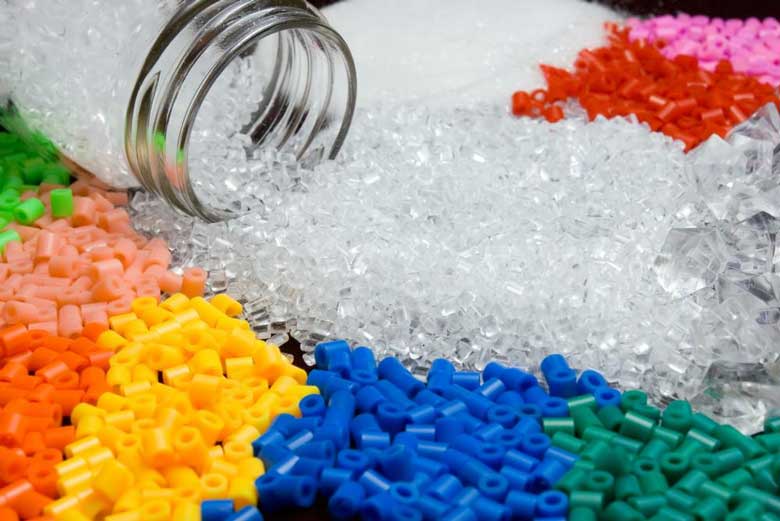
Wholesale Polyethylene From Iran | Bulk Polyethylene supplier

Polyethylene (PE) is one of the most widely used polymers in the world and a fundamental material in the packaging, agriculture, automotive, and petrochemical industries. With abundant natural gas resources and large petrochemical complexes, Iran has become one of the key exporters of polyethylene in the region.
Key Export Grades of Polyethylene (PE)
High-Density Polyethylene (HDPE)
- Key Feature: High density, with low or no chain branching.
- Properties: Very rigid, strong, excellent resistance to chemicals and moisture permeation, suitable heat resistance.
- Common Applications: Milk and detergent bottles, drums, water and gas pipes, durable toys, bins.
Linear Low-Density Polyethylene (LLDPE)
- Key Feature: Low density, but a linear molecular structure (more controlled branching than LDPE).
- Properties: High flexibility, excellent resistance to stretching and punctures (Puncture Resistance), relatively good clarity.
- Common Applications: Agricultural films (mulch), flexible packaging, shopping bags, cable jacketing, stretch films.
Low-Density Polyethylene (LDPE)
- Key Feature: Low density, molecular structure with significant chain branching.
- Properties: High softness and extreme flexibility, good transparency, easy processing.
- Common Applications: Thin plastic bags, food packaging, coatings, some squeeze containers
Cross-linked Polyethylene (XLPE or PEX)
- Key Feature: The polymer chains are chemically bonded (cross-linked) after polymerization, transforming it from a thermoplastic into a material with thermoset-like properties under high heat.
- Properties: Exceptional heat resistance (main distinction), superior long-term pressure resistance, excellent chemical resistance, and very good mechanical strength.
- Common Applications: High-voltage power cable insulation, hot water piping (plumbing systems), radiant floor heating systems, and high-pressure industrial hoses.
Technical Comparison: Polyethylene (PE) vs. Polypropylene (PP)
While both PE and PP are foundational commodity thermoplastics derived from fossil fuels, their subtle differences in molecular structure—dictated by their base monomers (Ethylene vs. Propylene)—result in distinct performance characteristics suitable for different global markets.
| Comparison of Polyethylene (PE) and Polypropylene (PP) | ||
| Feature |
Polyethylene (PE) | Polypropylene (PP) |
| Monomer | Ethylene | Propylene |
| Rigidity/Stiffness | Varies: Flexible (LDPE/LLDPE) to Semi-Rigid (HDPE) | Generally Stiffer and More Rigid across most grades. |
| Melting Point | Lower (105 °C- 135 °C) | Significantly Higher ( 160°C- 170°C) |
| Chemical Resistance | Excellent, especially at ambient temperatures. | Excellent, maintains barrier properties better than PE at elevated temperatures. |
| UV Resistance | Poor (Requires high levels of UV stabilizers for outdoor use) | Better inherent resistance to UV degradation. |
| Fatigue Resistance | Good | Superior (Often the benchmark for stress-crack and flexural fatigue resistance). |
| Transparency | Good (Especially for film grades like LDPE/LLDPE) | Can be very clear, but often has a slightly hazy appearance unless specialized random copolymer grades are used. |
Key Differences and Export Implications
1.Stiffness and Strength
PP Advantage: PP is inherently stiffer and has a higher strength-to-weight ratio than PE. This makes it the material of choice for applications requiring structural integrity without much weight, like car parts, stadium seating, and durable woven bags.
PE Note: HDPE is rigid, but PP generally offers better performance in applications demanding high dimensional stability under load.
2.Flexibility vs. Rigidity
PE Dominance: PE, particularly its low-density variants, dominates the flexible packaging sector (shrink film, stretch wrap, garbage bags) due to its excellent elongation and impact absorption.
PP Dominance: PP is the material of choice for injection-molded goods (crates, containers, automotive interiors) where rigidity, dimensional stability, and resistance to repeated flexing (living hinges) are paramount.
3.Flexibility and Toughness
PE Advantage: LDPE and LLDPE offer superior flexibility, impact strength at low temperatures, and easier sealing properties compared to PP. This is why they dominate the flexible film market (shopping bags, agricultural films).
PP Note: While PP is tough, it tends to become brittle at very low temperatures, unlike PE.
Shipping and Dispatch Methods for Bulk Polyethylene Orders
Bankchi Company offers four primary modes of transportation for Polyethylene exports: Road (Land), Sea, Air, and Multimodal (Combined) transport. Each method possesses distinct characteristics regarding delivery time, cost, and security, and can be selected based on the destination and order specifics.
- Land Transport: Ideal for neighboring countries, this method ensures fast delivery at a cost-effective rate. In some cases, delivery through neighboring countries’ seaports is also possible, enhancing speed and security.
- Sea Freight: A cost-efficient solution for distant destinations accessible by sea. Though delivery takes longer, it provides excellent product protection and reliable shipping.
- Air Freight: The fastest method for urgent orders. Despite higher costs, it guarantees rapid delivery and high product integrity.
- Combined Transport (Sea + Land/Rail): An optimal choice for regions with both sea and land access. This hybrid method balances cost and time while maintaining product quality.
Shipment Lead Time for Bulk Polyethylene Orders
The order preparation time typically ranges from 10 to 15 working days, varying depending on the order volume. The final delivery time is contingent upon the chosen shipping method (Land, Sea, Air, or Multimodal) and the final destination.
Land transport is generally faster for domestic deliveries and neighboring countries. In contrast, Sea and Multimodal transport may require more time due to longer distances. Air transport is the quickest method, usually taking approximately 3 to 4 working days. However, the precise delivery lead time ultimately depends on the selected transport mode and the final destination.
Contact Details and Instructions for Placing Bulk Polyethylene Orders
- Select & Specify Quantity: Choose your desired Polyethylene type and let us know the required quantity.
- Get Your Custom Quote: Bulk Polyethylene prices in Iran vary depending on the product type, order volume, shipping costs, and market fluctuations. We’ll provide you with a tailored quote based on your request.
- Contact Us Directly: For more information and to place an order, easily contact us via WhatsApp or at bonakcheewebsite@gmail.com. The bonakchee support team is ready to answer all your questions and process your order as quickly as possible.





Leave a Reply
Want to join the discussion?Feel free to contribute!